
Brazilian Jiu-Jitsu is growing fast, but the best first step is knowing what your first month should actually look like.
Brazilian Jiu-Jitsu has exploded in popularity over the last two decades, and the numbers back it up: search interest has climbed more than 100 percent since 2004, and millions of people train worldwide. We see that same momentum locally, especially with adults who want a practical skill, a challenging workout, and a community that feels grounded.
If you are thinking about Brazilian Jiu-Jitsu in Northport, the most helpful thing we can do is set expectations. Your first class will not look like a highlight reel. It will look like learning how to move safely, how to breathe when you are pinned, and how to be a good training partner. That is a good thing, because the foundations are what keep you progressing.
This guide walks you through what to bring, how classes usually run, how to reduce injury risk, and how to stay consistent long enough to see real change, even with a full schedule and a Long Island commute.
Why Brazilian Jiu-Jitsu is booming, and what that means for beginners
Brazilian Jiu-Jitsu works because it gives you a method for controlling distance, balance, and leverage, especially when strength and size are not in your favor. It is also a sport with endless depth, so it stays interesting long after the first few months. Add MMA visibility and social media clips, and more adults are stepping onto the mats than ever.
One detail we think beginners should know: growth can be a double-edged sword. The more popular something becomes, the more myths you will hear about what you should be doing on day one. Our approach is simpler. We want you training safely, learning real positions, and building skill in a way your body can handle.
Progress also takes time. Average promotion timelines often get quoted as roughly 2.3 years to blue belt, 5.6 to purple, and around 9 years to brown. That is not meant to intimidate you, it is meant to free you up. You do not need to “catch up.” You just need to show up and improve one class at a time.
What your first class will feel like (and why it is normal)
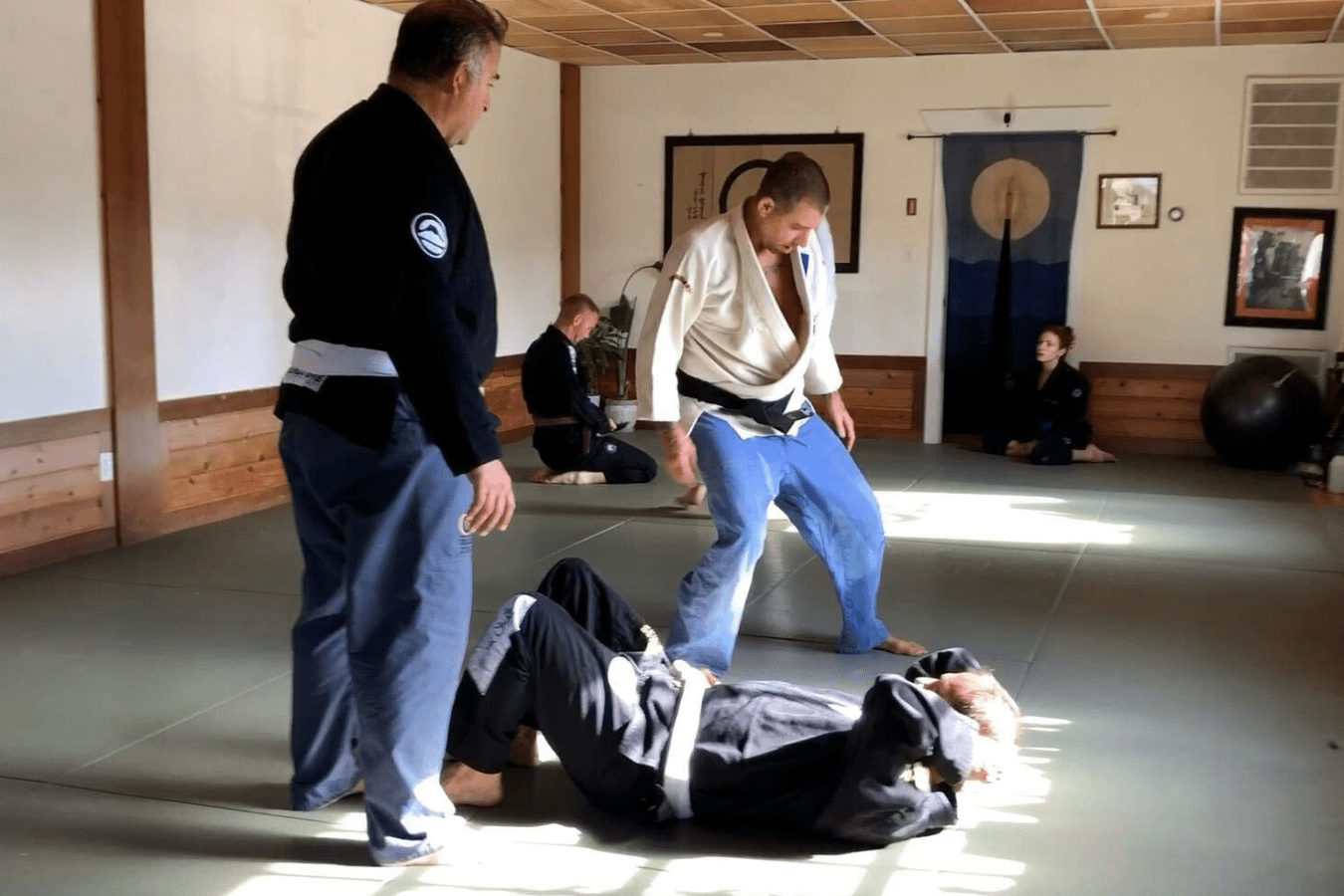
Most adults are surprised by how technical Brazilian Jiu-Jitsu is. The first few sessions can feel like learning a new language with your whole body. We teach you how to stand, how to fall, how to frame with your arms, and how to move your hips without straining your neck or lower back. You will sweat, but you will also pause, ask questions, and reset often.
Expect a little awkwardness at first. You might forget left versus right when someone is demonstrating a guard pass. You might tie your belt wrong. You might feel sore in places you did not know existed. That early phase is completely normal, and it fades as your movement becomes more efficient.
If you are worried about being “in shape enough,” we build fitness through training. Your conditioning improves quickly when you learn how to relax in bad positions and stop fighting every moment with pure effort.
Choosing gi vs no-gi: what you should start with
People often ask whether they should start with gi or no-gi. Both are Brazilian Jiu-Jitsu. Both teach control, escapes, and submissions. The difference is mostly in grips, pace, and how friction changes movement.
Gi training slows things down in a helpful way for many beginners because grips create more structure. No-gi tends to feel faster and a bit more slippery, which can be great, but it can also feel chaotic if you have never grappled before. We like giving you a base that transfers to both, so you do not feel boxed into one style.
If you are not sure, we recommend starting where you feel most comfortable and then cross-training as your confidence builds. Consistency matters more than picking the “perfect” uniform.
What to bring: your beginner gear checklist
Getting started does not require a huge shopping spree, but a few items will make training cleaner, safer, and more comfortable. Here is what we recommend for adult Brazilian Jiu-Jitsu in Northport as a practical baseline:
• A gi for gi classes, plus a belt that fits the gi size you choose, so your grips and movement feel consistent
• A rash guard and grappling shorts or spats for no-gi classes, which help prevent mat burn and skin irritation
• A mouthguard, especially once you begin live training regularly, because accidental bumps happen
• A small towel and flip-flops, so you can keep your feet clean off the mats and manage sweat between rounds
• Basic hygiene supplies like nail clippers and athletic tape, because short nails and covered scrapes protect everyone
Gear costs vary, and premium options exist, but you do not need the top shelf version to begin. We would rather see you start with solid basics and upgrade later if you feel committed.
Gym etiquette that keeps training safe and enjoyable
Good etiquette is not about being formal, it is about making the room work for everyone. We coach this early because it directly affects safety and progress. Being a great training partner will help you learn faster, and it also builds trust quickly.
We emphasize a few simple habits: show up clean, keep your nails short, remove jewelry, and communicate if something hurts or if you need to slow down. If you get caught in a submission, tap early and clearly. Tapping is not losing. It is how you train again tomorrow.
We also encourage beginners to ask questions, but to do it at the right moment. A quick question during drilling is fine. A long discussion in the middle of a round usually is not. Over time, you will feel the rhythm of class.
Injury risk in Brazilian Jiu-Jitsu, and how we reduce it
Brazilian Jiu-Jitsu is a contact sport, so injuries can happen. A 2019 study found that 59.2 percent of athletes reported an injury in the prior six months, and higher training frequency can be a factor. We take that seriously, especially with adults balancing work, family, and the reality that you still need to feel good on Monday morning.
Our biggest injury-prevention principle is progressive intensity. Early on, we want you learning positions and escapes before you chase submissions at full speed. We teach you to protect your neck, to avoid posting your arm in risky ways, and to move with structure instead of panic.
Recovery matters, too. Sleep, hydration, and doing a little mobility work will change how you feel week to week. If you train hard, eat like you did not train, and sleep like you are still in college, your body will let you know. Most adults figure that out quickly.
A realistic schedule for busy adults in Northport
The best plan is the one you can repeat. For many beginners, two to three classes per week is a sweet spot. It gives you enough repetition to retain skills, while leaving room for recovery. When you train more often, you improve faster, but only if your body holds up and your stress stays manageable.
We also think it helps to treat your training like an appointment. Put it on your calendar. Pack your gear the night before. If you commute, plan around traffic so you are not rushing in already tense.
Here is a simple progression we often recommend:
1. Start with 2 classes per week for the first month to learn movement patterns and reduce soreness spikes
2. Add a third class when you can train without feeling wrecked for two days afterward
3. Begin light live rounds when you understand basic escapes and can tap calmly under pressure
4. Increase intensity gradually, choosing technical rounds over “win every scramble” rounds
5. Reassess every 8 to 12 weeks based on how your body feels and what your goals are
That kind of pacing keeps training sustainable, which matters because consistency is the real advantage.
Why many beginners quit, and how to avoid the white belt trap
There is a tough statistic that floats around the BJJ world: roughly 70 percent of white belts quit, and only about 1 percent reach black belt. We do not share that to be dramatic. We share it because most dropouts happen for predictable reasons, and you can sidestep them.
The most common issues are unrealistic expectations, trying to train like an athlete right away, and feeling discouraged after tapping a lot. Everyone taps a lot early. That is not a sign you are failing. It is a sign you are learning in a live environment, which is the whole point.
We encourage you to measure progress differently in the first 90 days. Did you remember a basic escape? Did you stay calmer under pressure? Did you recognize a position before someone explained it? Those are real wins, and they add up faster than you think.
How Brazilian Jiu-Jitsu and Judo complement each other for real grappling
Many adults come in thinking grappling equals ground fighting only. In reality, the transition from standing to the mat is a major part of self-defense and sport performance. That is where Judo brings huge value.
We use Judo concepts to help you understand posture, balance, grips, and how to fall safely. That last part matters. Learning breakfalls and controlled takedown entries can reduce injury risk and increase confidence, especially for adults who have not wrestled before.
The combination also keeps training interesting. Some days you will feel your guard passing click. Other days you will realize your stance and footwork are improving. Those small shifts are how you build a complete grappling skill set over time.
What results you can expect in the first 3 months
You will not become a different person in a week, but you can absolutely change your baseline in a few months. Most adults notice better conditioning, improved mobility, and a clearer sense of how to handle pressure. Stress relief is real here, too, but it is not fluffy. When you practice staying calm while someone is trying to control you, everyday stressors tend to feel more manageable.
Skill-wise, the first three months are about survival fundamentals: how to escape bad positions, how to maintain top pressure safely, and how to recognize common submissions before you are already stuck. You will also start building a personal “game,” even if it is just one guard you like and one pass that works for your body type.
If you stick with it, the next phase becomes more fun because you are no longer guessing every second. You begin making choices.
Ready to Begin
If you want to start Brazilian Jiu-Jitsu with a plan that respects your body and your schedule, we are ready to help you take that first step. We keep training practical, structured, and beginner-friendly, while still giving you room to challenge yourself as your confidence grows.
When you are ready, come train with us at OM Brazilian Jiu-Jitsu & Judo in Northport and see how consistent coaching, supportive partners, and progressive intensity make the early months feel approachable instead of overwhelming.
Train with experienced instructors in a supportive environment by joining a Brazilian Jiu-Jitsu class at OM Brazilian Jiu Jitsu & Judo.